Application of the GSP Chart and ROC Method to Develop A Grade 8 Natural Science Item Bank from Empirical Data Analysis
DOI:
https://doi.org/10.65150/EP-jsshrs/V2E3/2026-02Keywords:
GSP Chart, ROC Method, Item Bank, Natural Science, Educational Assessment.Abstract
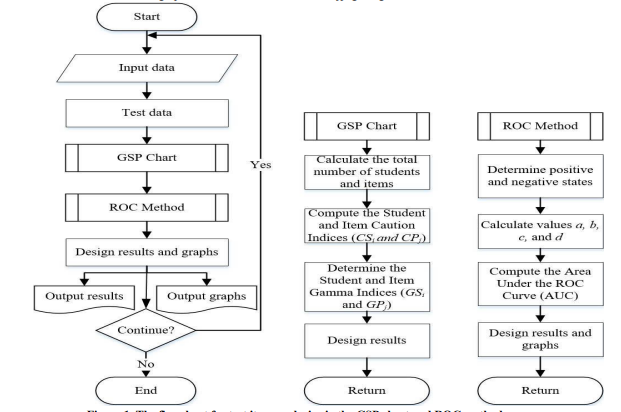
The objective of this study is to apply the GSP chart and ROC method to analyze and select Grade 8 Natural Science test items, thereby constructing an item bank to assess student learning outcomes. The Grade 8 Natural Science test was designed in accordance with Official Dispatch No. 7991/BGDĐT-GDTrH, issued by the Ministry of Education and Training of Vietnam on December 17, 2024, regarding the implementation of testing and assessment for lower and upper secondary education. The study was conducted with a sample of 116 students who took the Grade 8 Natural Science test under a new format consisting of four parts: Part 1 comprised 12 multiple-choice questions (four options with one best answer); Part 2 included 8 True/False questions; Part 3 consisted of 4 short-answer questions; and Part 4 contained 6 constructed-response (essay) questions. The research results demonstrated that MATLAB software can be effectively utilized to develop a toolbox for analyzing and selecting test items based on the GSP chart and ROC method. This toolbox facilitates rapid, accurate, and easy calculations, intuitively displaying results and visualizations via a Graphical User Interface (GUI), which can support teachers in building item banks to assess student learning outcomes.
References
1) Bui, A. K., & Bui, N. P. (2018). Using IATA to analyze, assess and improve the quality of the multiple-choice questions in chapter power functions, exponential functions and logarithmic functions. Can Tho University Journal of Science, 54(9), 81–93.
2) Bui, N. Q. (2017). Assessment of the quality of multiple choice test bank for the module of Introduction to Anthropology by using the RASCH model and QUEST software. Science of Technology Development, 20(X3), 42–54.
3) Cronbach, L. J. (1951). Coefficient alpha and the internal structure of tests. Psychometrika, 16(3), 297-334.
4) Doan, H. C., Le, A. V., & Pham, H. U. (2016). Applying 3-parameter logistic model in validating the level of difficulty, discrimination and guessing of items in a multiple choice test. Ho Chi Minh city University of Education Journal of Science, 7 (85), 174.
5) Foster, R. C. (2021). KR20 and KR21 for some nondichotomous data (it’s not just cronbach’s alpha). Educational and Psychological Measurement, 81(6), 1172-1202.
6) Kumar, R., & Indrayan, A. (2011). Receiver operating characteristic (ROC) curve for medical researchers. Indian Pediatrics, 48, 277–287.
7) Nguyen, P. H. (2016). Using GSP chart and ROC method to analyze mutiple-choice test items and assess learning outcomes of students. Journal of Education Science, Vietnam Institute of Education Science, 134(11), 32–37.
8) Nguyen, P. H. (2017). Using GSP chart and ROC method to analyze and select mutiple-choice test items. Dong Thap University Journal of Science, 24(2), 11–17.
9) Nguyen, P. H., Nguyen, V. C., & Trinh, T. K. B. (2024). Assessing the Quality of Multiple-Choice Test Items Based on BILOG-MG, R (ltm), IATA, and GSP-ROC. WVSU Research Journal, 13(1), 1-12.
10) Nguyen, P. H., & Du, T. N. (2015). The analysis and selection of mutiple-choice test items based on S-P chart, Grey Relational Analysis, and ROC curve. Ho Chi Minh city University of Education Journal of Science, 6 (72), 163.
11) Nguyen, P. H., Ta, P. H., & Trinh, T. K. B. (2018). Building the standard test score based on the combination of T-GM(m,n), GRA and ROC method. Dong Thap University Journal of Science, 35, 10–17.
12) Nguyen, P. H., & Trinh, T. K. B. (2017). Assessment of students’ learning outcomes a combination of GSP chart and ROC method. AGU International Journal of Sciences, 17(5), 103–112.
13) Nguyen, P. H., & Trinh, T. K. B. (2022). Assessment of Students’ Learning Outcomes in Higher Education. International Journal of Uncertainty and Innovation Research, 4(1), 39–52.
14) Nguyen, P. H., & Trinh, T. K. B. (2023). Researching and Building A Computer-Based System for Testing and Assessing Learners' Ability (A Case Study in Preschool Teacher Training). TNU Journal of Science and Technology, 229(04), 124–132.
15) Nguyen, P. H., & Trinh, T. K. B. (2024). Developing A Computer-Based System for Testing and Assessing Learners’ Ability: A Case Study in General Education. Vinh University Journal of Science, 53, 331–340.
16) Nguyen, P. H., Nguyen P. T., Ho C. P., Trinh, T. K. B., & Nagai M. (2017). The Prediction of the Admission Teacher’s Number in Taiwan by using T-GM(1,n) and T-GM(2,n) Method. Journal of Grey System, 20(3), 139-150.
17) Nguyen, P. H., Sheu, T. W., & Nagai, M. (2015). Predicting the Student Learning Outcomes Based on the Combination of Taylor Approximation Method and Grey Models. VNU Journal of Science: Education Research, 31, 70-83.
18) Nguyen, V. C., & Nguyen, P. H. (2020). Analyzing and Selecting Multiple-Choice Test Items Based on Classical Test Theory and Item Response Theory. Ho Chi Minh city University of Education Journal of Science, 17(10), 1804.
19) Pham, T. M., & Bui, Đ. N. (2019). The IATA software for analyzing, evaluation of multiple-choice questions at Ha Noi Metropolitan University. Scientific Journal of Ha Noi Metropolitan University, 20(2019), 97–108.
20) Tavakol, M., & Dennick, R. (2012). Standard setting: The application of the receiver operating characteristic method. In Int J Med Educ (Vol. 3, pp. 198–200). IJME.
Downloads
Published
Issue
Section
License
Copyright (c) 2026 Nguyen Phuoc Hai, Trinh Thi Kim Binh (Author)

This work is licensed under a Creative Commons Attribution 4.0 International License.