The Impact of Learner Autonomy on Critical Thinking Performance in an EFL Context
DOI:
https://doi.org/10.65150/EP-jsshrs/V2E3/2026-06Keywords:
Autonomous learning, EFL learning, Libyan EFL learners; critical thinking skills; self-efficacy; decision making; goal setting; reflective thinkingAbstract
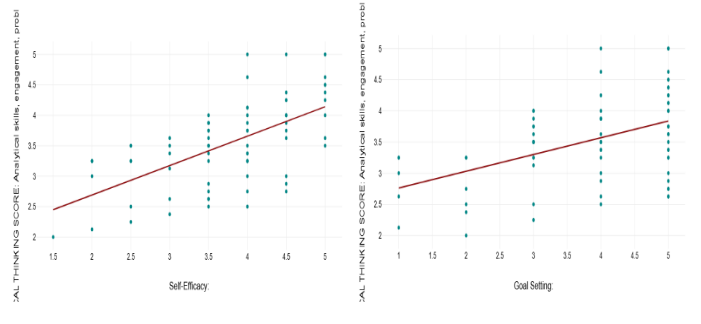
The present quantitative study explores the influence of certain elements of autonomous learning (goal setting, reflective learning, self-efficacy, decision making) on critical thinking skills in an EFL context. The sampled learners were 76 Libyan university EFL students, and the data was collected through a structured Likert scale questionnaire that was distributed online. The results of the study show that critical thinking skills have a strong correlation with reflective thinking and decision-making. On the other hand, self-efficacy and goal setting have the weakest correlation with critical thinking skills.
References
1) Alnofaie, H. A. (2013). The implementation of critical thinking as EFL pedagogy: Challenges and opportunities (Doctoral thesis). Newcastle University, School of Education, Communication, and Language Sciences.
2) Anderson, D. R., Williams, T. A., & Cochran, J. J. (2020). Statistics for business & economics. Cengage Learning.
3) Anderson, L. W., & Krathwohl, D. R. (2001). A taxonomy for learning, teaching, and assessing: A revision of Bloom's taxonomy of educational objectives: complete edition. Addison Wesley Longman, Inc.
4) Bamberger, J., & Schön, D. A. (1983). Learning as reflective conversation with materials: Notes from work in progress. Art Education, 36(2), 68-73.
5) Bandura, A. (1997). Self-efficacy: The exercise of control. W.H. Freeman.
6) Benson, P. (2001). Teaching and researching autonomy in language learning. Longman.
7) Bloom, B. S. (1956). Taxonomy of educational objectives: The classification of educational goals. Handbook I: Cognitive domain. New York, NY: David McKay Company.
8) Chatterjee, S., & Hadi, A. S. (2012). Regression Analysis by Example (5th ed.). Wiley.
9) Cohen, J. (1988). Statistical power analysis for the behavioral sciences (2nd ed.). Lawrence Erlbaum Associates.
10) Cotterall, S. (1995). Readiness for autonomy: Investigating learner beliefs. System, 23(2), 195–205.
https://doi.org/10.1016/0346-251X(95)00008-8
11) Dafei, D. (2007). An exploration of the relationship between learner autonomy and English proficiency. Asian EFL Journal, 24(4), 24-34.
12) DATAtab. (n.d.). DATAtab statistical software. Used from 2024 to 2025. Retrieved January 8, 2025, from https://datatab.net
13) Deci, E. L., & Ryan, R. M. (1985). Intrinsic motivation and self-determination in human behavior. Springer Science & Business Media.
14) Desmos. (n.d.). Desmos graphing calculator. Retrieved January 8, 2025, from https://www.desmos.com/calculator
15) DeVellis, R. F. (2016). Scale development: Theory and applications (4th ed.). Sage Publications.
16) DeVellis, R. F., & Thorpe, C. T. (2021). Scale development: Theory and applications. Sage publications.
17) Durbin, J., & Watson, G. S. (1951). Testing for serial correlation in least squares regression. Biometrika, 38(1-2), 159-178.
18) Egitim, S. (n.d.). The Role of Learner Autonomy in the Expression of Critical Thinking Skills.
19) Ehrman, M., & Oxford, R. (1990). Adult language learning styles and strategies in an intensive training setting. The modern language journal, 74(3), 311-327.
20) Ennis, R. (2011). Critical thinking: Reflection and perspective Part II. Inquiry: Critical thinking across the Disciplines, 26(2), 5-19.
21) Facione, P. A. (1990). Critical thinking: A statement of expert consensus for purposes of educational assessment and instruction. The Delphi Report. Millbrae, CA: California Academic Press.
22) Field, A. (2013). Discovering statistics using IBM SPSS Statistics (4th ed.). Sage Publications.
23) Field, A. (2018). Discovering statistics using IBM SPSS Statistics (5th ed.). Sage Publications.
24) Garrison, D. R., Anderson, T., & Archer, W. (2001). Critical thinking, cognitive presence, and computer conferencing in distance education. American Journal of Distance Education, 15(1), 7–23. https://doi.org/10.1080/08923640109527071
25) Halpern, D. F. (1998). Teaching critical thinking for transfer across domains: Dispositions, skills, and metacognitive monitoring. American Psychologist, 53(4), 449–455. https://doi.org/10.1037/0003-066X.53.4.449
26) Haque, M. M., Jaashan, H. M., & Hasan, M. Z. (2023). Revisiting Saudi EFL learners’ autonomy: a quantitative study. Innovation in Language Learning and Teaching, 17(4), 845–858. https://doi.org/10.1080/17501229.2023.2166512
27) Holec, H. (1981). Autonomy and foreign language learning. Pergamon Press.
28) Huang, J. (Peter), & Benson, P. (2013). Autonomy, Agency and Identity in Foreign and Second Language Education. Chinese Journal of Applied Linguistics, 36(1). https://doi.org/10.1515/cjal-2013-0002
29) Huang, Q., Muhamad, M. M., Che Nawi, N. R. binti, & Li, W. (2023). A Study on the Impact of Critical Thinking Skills and Foreign Language Enjoyment on Foreign Language Performance. International Journal of Academic Research in Progressive Education and Development, 12(3). https://doi.org/10.6007/ijarped/v12-i3/18077
30) James, G., Witten, D., Hastie, T., & Tibshirani, R. (2013). An Introduction to Statistical Learning: With Applications in R. Springer.
31) Khaola, P. P., & Ramokepa, N. M. (2015). Determinants of attitudes, patronage intentions and the desire to spend time at a mall: The case of Pioneer Shopping Mall in Maseru, Lesotho. KJBM, 7(1), 18–30. https://www.researchgate.net/publication/290434000
32) Khaola, P., & Ramokepa, N. M. (2016). Determinants of Attitudes, Patronage Intentions and the Desire to Spend time at a Mall: The Case of Pioneer Shopping Mall in Maseru, Lesotho Determinants of Attitudes, Patronage Intentions and the Desire to Spend at a Mall: The Case of Pioneer Shopping Mall in Maseru, Lesotho (Vol. 7, Issue 1). https://www.researchgate.net/publication/290434000
33) Ku, K. Y. L. (2009). Assessing students’ critical thinking performance: Urging for measurements using multi-response format. Thinking Skills and Creativity, 4(1), 70–76. https://doi.org/10.1016/j.tsc.2009.02.001
34) Kutner, M. H., Nachtsheim, C. J., Neter, J., & Li, W. (2005). Applied linear statistical models. McGraw-hill.
35) Li, M., Zhang, Y., & Wang, Y. (2021). Investigating the impact of learner autonomy on critical thinking in EFL education. Language Teaching Research, 25(4), 567-586.
36) Liang, W., & Fung, D. (2021). Fostering critical thinking in English-as-a-second-language classrooms: Challenges and opportunities. Thinking Skills and Creativity, 39, 100769. https://doi.org/10.1016/j.tsc.2020.100769
37) Littell, R. C. (1989). Statistical analysis of experiments with repeated measurements. HortScience, 24(1), 37-40.
38) Little, D. (1995). Learning as dialogue: The dependence of learner autonomy on teacher autonomy. System, 23(2), 175–181. https://doi.org/10.1016/0346-251X(95)00006-4
39) Littlewood, W. (1996). Autonomy: An anatomy and a framework. System, 24(4), 427-435
40) Liu, Y., Arifani, Y., Hidayat, N., Wijayatiningsih, T. D., & Koiri, M. (2024). Learners’ Readiness for Autonomy and Online Learning: EFL Teachers’ Beliefs and Practices. Ubiquitous Learning, 17(1), 183–203. https://doi.org/10.18848/1835-9795/CGP/v17i01/183-203
41) Long, H. B. (1989). Self-directed learning: Emerging theory and practice. In H. B. Long & Associates (Eds.), Self-directed learning: Emerging theory and practice (pp. 1–11). Oklahoma Research Center for Continuing Professional and Higher Education, University of Oklahoma.
42) Macaskill, A., & Taylor, E. (2010). The development of a brief measure of learner autonomy in university students. Studies in Higher Education, 35(3), 351–359.
43) Maxwell, L. K., & David, C. H. (1995). The application of the Durbin-Watson test to the dynamic regression model under normal and non-normal errors. Econometric reviews, 14(4), 487-510.
44) Najeeb, N. (2013). Learner autonomy in language learning: A case study. International Journal of Language and Linguistics, 1(4), 1239-1246.
45) Newbold, P., Carlson, W. L., & Thorne, B. M. (2013). Statistics for business and economics. Pearson.
46) Nosratinia, M., & Zaker, A. (2013). Autonomous learning and critical thinking: Inspecting the association among EFL learners. The First National Conference on Teaching English, Literature, and Translation (NCTLT), Shiraz University, Iran, August 2013. Retrieved from ResearchGate.
47) Nosratinia, M., & Zaker, A. (2013). Autonomous learning and critical thinking: Inspecting the association among EFL learners. In First National Conference on Teaching English, Literature, and Translation, Shiraz University, Shiraz, Iran. Retrieved from http://www. civilica. com/Paper-TELT01-TELT01_226. html.Oxford, R. L. (1990). Language learning strategies: What every teacher should know. Newbury House.
48) Nosratinia, M., & Zaker, A. (2014). Metacognitive Attributes and Liberated Progress. SAGE Open, 4(3), 215824401454717. https://doi.org/10.1177/2158244014547178
49) Nosratinia, M., & Zaker, A. (2015). Boosting autonomous foreign language learning: Scrutinizing the role of creativity, critical thinking, and vocabulary learning strategies. International Journal of Applied Linguistics and English Literature, 4(4), 86–97.
https://doi.org/10.7575/aiac.ijalel.v.4n.4p.86
50) Oxford, R. L. (1990). Language learning strategies: What every teacher should know. Newbury House.
51) Palfreyman, D. (2020). Autonomy in language learning: A critical discussion. In D. Palfreyman & R. C. Smith (Eds.), Learner autonomy across cultures: Language education perspectives (pp. 1-20). New York, NY: Routledge.
52) Pang, Y. (2022). The role of web-based flipped learning in EFL learners’ critical thinking and learner engagement. Frontiers in Psychology, 13. https://doi.org/10.3389/fpsyg.2022.1008257
53) Schön, D. A. (1983). The reflective practitioner: How professionals think in action. Basic Books.
54) Sobkowiak, P. (2016). Critical thinking in the intercultural context: Investigating EFL textbooks. Studies in Second Language Learning and Teaching, 6(4), 697–716. https://doi.org/10.14746/ssllt.2016.6.4.7
55) Standage, M., Duda, J. L., & Ntoumanis, N. (2005). A motivational model of physical education. Journal of Educational Psychology, 97(3), 297-308.
56) Tabachnick, B. G., & Fidell, L. S. (2019). Using Multivariate Statistics (7th ed.). Pearson.
57) Tavakol, M., & Dennick, R. (2011). Making sense of Cronbach's alpha. International Journal of Medical Education, 2, 53-55.
58) Vemury, C. M., & Devlin, M. (2012). Personalised approach to learner autonomy. Retrieved from ResearchGate.
59) Vygotsky, L. S. (1978). Mind in society: The development of higher psychological processes. Cambridge, MA: Harvard University Press.
60) Wolberg, W. H. (2010). Data analysis using regression and multilevel/hierarchical models. Sage Publications.
61) Yang D, Chen P, Wang H, Wang K and Huang R (2022) Teachers’ autonomy support and student engagement: A systematic literature review of longitudinal studies. Front. Psychol. 13:925955. doi: 10.3389/fpsyg.2022.925955
62) Yang, Y., Zhang, L., & Liu, H. (2022). Learner autonomy and critical thinking in EFL: A meta-analysis. Language Teaching Research, 26(3), 345-367.
63) Zimmerman, B. J. (2000). Attaining self-regulation: A social cognitive perspective. In M. Boekaerts, P. R. Pintrich, & M. Zeidner (Eds.), Handbook of self-regulation (pp. 13–39). Academic Press.
64) Zimmerman, B. J. (2002). Becoming a self-regulated learner: An overview. Theory Into Practice, 41(2), 64–70. https://doi.org/10.1207/s15430421tip4102_2
Downloads
Published
Issue
Section
License
Copyright (c) 2026 Iman Albakkosh, Mark Lloyd (Author)

This work is licensed under a Creative Commons Attribution 4.0 International License.