Lawyers, Legal Literacy and Civil Disputes: Public Perceptions and Access-To-Justice Implications
DOI:
https://doi.org/10.65150/EP-jsshrs/V2E7/2026-36Keywords:
access to justice, legal capability, legal literacy, legal aid accessibility, perceived legal readiness, civil disputesAbstract
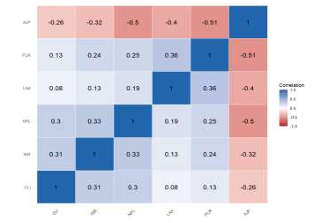
Access to justice is a cornerstone of the rule of law; however, civil disputes frequently present a significant threshold when a complainant aims to defend, or enforce, the rights and interests under the law. Based on the Legal Capability Framework and Self-Efficacy Theory, this research investigates how the sources of Institutional Support Resources (ISR), Civil Legal Insight (CLI), Navigation of Legal Procedures (NPL), Legal Aid Accessibility (LAA) and Perceived Legal Readiness (PLR) influence Access-to-Justice Problems (AJP). Data was gathered through a structured questionnaire, which was subsequently subjected to two rounds of expert review and was tested through the development of an integrated research model: 326 survey participants engaged in this study were questioned. PLS-SEM (Partial Least Squares Structural Equation Modeling) was used for examining the proposed relations. Results show that both ISR and CLI lead to significant improvements in PLR. Additionally, CLI, NPL, LAA and PLR significantly reduce Access-to-Justice Problems, and NPL is the best direct predictor of lower justice-oriented barriers. The mediation analysis shows that the mediation effect of PLR on Access-to-Justice Problems with ISR and LAA are very significant. These results in turn add to access-to-justice and legal capability literature by finding Perceived Legal Readiness as a prominent mediating factor that links legal resources and abilities to enhance justice outcomes. It also bears practical value to policy makers and legal institutions who wish to foster citizen ability to navigate law and access justice.
References
1) Angelelli, M., Ciavolino, E., Ringle, C. M., Sarstedt, M., & Aria, M. (2025). Conceptual structure and thematic evolution in partial least squares structural equation modeling research. Quality & Quantity, 59(3), 2753-2798. https://doi.org/10.1007/s11135-025-02071-4
2) Aoun, D., Youssef, C., & Jabbour Al Maalouf, N. (2026). Behavioral determinants of cryptocurrency adoption during financial collapse: Evidence from Lebanon. International Review of Economics & Finance, 107, 105165. https://doi.org/10.1016/j.iref.2026.105165
3) Bandura, A. (1986). Social Foundations of Thought and Action: A Social Cognitive Theory. Prentice-Hall.
4) Barendrecht, M. (2011). Rule of Law, Measuring and Accountability: Problems to be Solved Bottom Up. Hague Journal on the Rule of Law, 3(2), 281-304. https://doi.org/10.1017/S1876404511200071
5) Bonizzoni, P., De Blasis, F., & Lampredi, G. (2025). Migration Intermediation and Ethical Boundary Work: the Case of Italy’s Legal-Administrative Field. Journal of International Migration and Integration, 26(3), 1619-1641. https://doi.org/10.1007/s12134-025-01251-3
6) Calvi, A. (2024). Data Protection Impact Assessment under the EU General Data Protection Regulation: A feminist reflection. Computer Law & Security Review, 53, 105950. https://doi.org/10.1016/j.clsr.2024.105950
7) Cappelletti, M., & Garth, B. G. (1978). Access to Justice: The Newest Wave in the Worldwide Movement to Make Rights Effective. Buffalo Law Review, 27(2), 181-292. https://repository.law.indiana.edu/facpub/1142
8) Cozzi, G. (2007). Self-fulfilling prophecies in the quality ladders economy. Journal of Development Economics, 84(1), 445-464. https://doi.org/10.1016/j.jdeveco.2005.12.004
9) Chen, X. (2023). Human Nature Foundation of Administration of Justice. In X. Chen (Ed.), Humanistic Foundation of Criminal Law (pp. 403-456). Springer Nature Singapore. https://doi.org/10.1007/978-981-19-9764-8_10
10) Denvir, C., Balmer, N. J., & Pleasence, P. (2013). When legal rights are not a reality: do individuals know their rights and how can we tell? Journal of Social Welfare and Family Law, 35(1), 139-160. https://doi.org/10.1080/09649069.2013.774764
11) Ergashev, I. A. (2025). Civil Society and Legal Culture: Shaping Legal Consciousness Through Semantic Signs. International Journal for the Semiotics of Law - Revue internationale de Sémiotique juridique, 38(7), 2155-2180. https://doi.org/10.1007/s11196-025-10316-6
12) Gélinas, F. (2012). Judicial Independence in Canada: A Critical Overview. In A. Seibert-Fohr (Ed.), Judicial Independence in Transition (pp. 567-600). Springer Berlin Heidelberg. https://doi.org/10.1007/978-3-642-28299-7_14
13) Genn, H. (2005, 2005/01/19). Solving Civil Justice Problems: What Might Be Best? Scottish Consumer Council Seminar on Civil Justice, London, United Kingdom.
14) Goodwin, L., & Maru, V. (2017). What Do We Know about Legal Empowerment? Mapping the Evidence. Hague Journal on the Rule of Law, 9, 1-38. https://doi.org/10.1007/s40803-016-0047-5
15) Hu, J. (2024). The Facilitative Role of Law, 1992–2001. In J. Hu (Ed.), The Role of Law in China’s Economic Development, 1978–2011: A Study in Law and Political Economy (pp. 117-174). Springer Nature Singapore. https://doi.org/10.1007/978-981-99-9911-8_5
16) K, R., & Singai, C. (2022). Reforms in legal aid and awareness with regard to the aged in India: A case for an inclusive approach. Jindal Global Law Review, 13(2), 253-276. https://doi.org/10.1007/s41020-022-00178-5
17) Kritika, M. (2026). Ethical and legal dimensions of integrating neurotechnology with cybersecurity, a critical reflection for information and communication technology (ICT) policy and practice. International Cybersecurity Law Review, 7(1), 69-129.
https://doi.org/10.1365/s43439-026-00168-6
18) Le Thi, T. (2026). Corporate Criminal Liability in Global Value Chains: Transnational Responsibility and Doctrinal Alignment. Criminal Law Forum, 37(1), 4. https://doi.org/10.1007/s10609-026-09523-y
19) Liu, Y. (2010). Evasion in the conflict of laws and its possible solution in China. Frontiers of Law in China, 5(4), 626-644.
https://doi.org/10.1007/s11463-010-0114-0
20) M. Boland, G., & Salami, T. (2021). The Mental Health and Service Use of Texas Law Enforcement Officers. Journal of Police and Criminal Psychology, 36(2), 288-294. https://doi.org/10.1007/s11896-020-09419-6
21) Mahdi, S., Al-Quraishi, M. K., Hammam, A. F. S., Madhi, Z. J., Nassar, W., & Vorona, P. (2026, 2026//). Legal Pluralism in Multi-Ethnic Societies: Blockchain, Family Law, and Socio-Legal Integration. Optimization and Data Science in Industrial Engineering, Cham.
22) Mukundan, K. P. A. (2025). Legal Aid Services in the Juvenile Justice System: A Field Action Research. In A. Akhup, B. Tripura, & B. Jojo (Eds.), Social Work Research: Methodologies in Fields of Practice (pp. 231-243). Springer Nature Singapore.
https://doi.org/10.1007/978-981-96-7125-0_14
23) Poullet, Y. (2011). e-Youth before its judges – Legal protection of minors in cyberspace. Computer Law & Security Review, 27(1), 6-20. https://doi.org/10.1016/j.clsr.2010.11.011
24) Rothman, D., & Claiborne, Z. G. (2005). What drives the dispute? Analyzing party psychology provides an opportunity for mediation room success. Alternatives to the High Cost of Litigation, 23(7), 111-112. https://doi.org/10.1002/alt.20083
25) Rumjaun, A., & Narod, F. (2025). Social Learning Theory—Albert Bandura. In B. Akpan & T. J. Kennedy (Eds.), Science Education in Theory and Practice: An Introductory Guide to Learning Theory (pp. 65-82). Springer Nature Switzerland. https://doi.org/10.1007/978-3-031-81351-1_5
26) Sandefur, R. L. (2010). The Impact of Counsel: An Analysis of Empirical Evidence. Seattle Journal for Social Justice, 9(1), 51-95. https://digitalcommons.law.seattleu.edu/sjsj/vol9/iss1/3
27) Sarstedt, M., Ringle, C. M., & Hair, J. F. (2020). Partial Least Squares Structural Equation Modeling. In C. Homburg, M. Klarmann, & A. Vomberg (Eds.), Handbook of Market Research (pp. 1-56). Springer Nature Switzerland.https://doi.org/10.1007/978-3-319-05542-8_15-3
28) Shaw, J. J. A. (2012). The Continuing Relevance of Ars Poetica to Legal Scholarship and the Modern Lawyer. International Journal for the Semiotics of Law - Revue internationale de Sémiotique juridique, 25(1), 71-93. https://doi.org/10.1007/s11196-010-9214-5
29) Shestowsky, D. (2016). New Research Sheds Light on How Litigants Evaluate the Characteristics of Legal Procedures. Alternatives to the High Cost of Litigation, 34(10), 145-154. https://doi.org/10.1002/alt.21655
30) Singha, Y. M. (2026). Law as Sign, Justice as Symbol: A Semiotic Analysis of Legal Aid and Justice Delivery in Assam. International Journal for the Semiotics of Law - Revue internationale de Sémiotique juridique. https://doi.org/10.1007/s11196-026-10419-8
31) Summary-Smith, J. J. (2022). American Bar Association. In L. A. Schintler & C. L. McNeely (Eds.), Encyclopedia of Big Data (pp. 18-19). Springer International Publishing. https://doi.org/10.1007/978-3-319-32010-6_4
32) Tadayon Nabavi, R., & Bijandi, M. (2012). Bandura's Social Learning Theory & Social Cognitive Learning Theory.
33) Tor, A. (2026, 2026//). Behavioral Agency Problems and Solutions: A Research Agenda for Organizational Law and Beyond. Law and Economics of Organizations, Cham.
34) Tunidau, J., & Thai, V. V. (2010). Critical factors for successful implementation of the ISM Code in some Pacific Islands states. WMU Journal of Maritime Affairs, 9(1), 63-80. https://doi.org/10.1007/BF03195166
35) Turanjanin, V., & Kovačević, A. (2025). Access to free legal aid in Serbia from the perspective of municipal services. Discover Global Society, 3(1), 148. https://doi.org/10.1007/s44282-025-00283-5
36) Tyler, T., & Lind, E. (1992). A Relational Model of Authority in Groups. Advances in Experimental Social Psychology, 25, 115-192. https://doi.org/10.1016/S0065-2601(08)60283-X
37) Vargas Penagos, E. (2025). The digital prior restraint: Applying human rights safeguards to upload filters in the EU. Computer Law & Security Review, 59, 106219. https://doi.org/10.1016/j.clsr.2025.106219
38) Virkar, S., Alexopoulos, C., Tsekeridou, S., & Novak, A.-S. (2022). A user-centred analysis of decision support requirements in legal informatics. Government Information Quarterly, 39(3), 101713. https://doi.org/10.1016/j.giq.2022.101713
39) Weber, A. (2022). Constitutional Courts: Supreme Courts. In W. Babeck & A. Weber (Eds.), Writing Constitutions: Volume I: Institutions (pp. 343-391). Springer International Publishing. https://doi.org/10.1007/978-3-030-94602-9_11
40) Wejedal, S. (2023). Simplification of Procedure. In E. Storskrubb (Ed.), YSEC Yearbook of Socio-Economic Constitutions 2022: Funding of Justice (pp. 183-214). Springer Nature Switzerland. https://doi.org/10.1007/16495_2023_48
41) Woodring, D. (2026). Assessing Institutional Readiness and Capacity (Phase 1). In D. Woodring (Ed.), Advancing Higher Education with Human-Centric AI Partnerships: A Sustainable Guide for Integrating Generative AI (pp. 145-169). Springer Nature Switzerland. https://doi.org/10.1007/978-3-032-05205-6_8
Downloads
Published
Issue
Section
License
Copyright (c) 2026 MSc. Nhu Thuy Lien, MSc. Nguyen Hong Van (Author)

This work is licensed under a Creative Commons Attribution 4.0 International License.