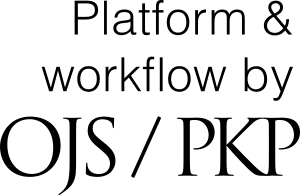
Sustainable Design Thinking in Applied Arts: Integrating Local Materials, Aesthetic Values, And Contemporary Creativity
DOI:
https://doi.org/10.65150/EP-jsshrs/V2E11/2026-04Keywords:
sustainable design, applied arts, local materials, craft knowledge, aesthetic value, circular economy, contemporary creativityAbstract
Background: Applied-arts design increasingly faces the challenge of reducing material impacts while preserving aesthetic distinction and recognising local craft knowledge. Local materials are often promoted as inherently sustainable, although their actual performance depends on sourcing, treatment, production, use, repair, and disposal.
Objective: This study develops an integrated approach to sustainable design thinking connecting material provenance, life-cycle responsibility, cultural and aesthetic meaning, and creative experimentation.
Methods: An integrative conceptual review and practice-oriented comparison draw on design-for-sustainability scholarship, circular-design guidance, ISO life-cycle principles, UNESCO's understanding of craftsmanship, and a recent Vietnamese account of Khmu weaving. No prototypes, laboratory tests, or life-cycle inventories were produced.
Results: Four recurrent tensions are identified: local identity versus environmental proof; craft continuity versus product standardisation; aesthetic novelty versus durability; and material substitution versus system change. A five-element PLACE framework-Provenance, Life cycle, Aesthetic coherence, Craft partnership, and Experimental iteration-is proposed with a decision matrix for material, cultural, and design assessment.
Conclusion: Sustainable creativity in applied arts should be evaluated through a traceable design process that combines environmental evidence, meaningful aesthetics, and fair collaboration rather than through the unverified label 'natural' or 'local'. The framework is a conceptual design tool requiring testing in actual design studios and production chains.
References
1) Antunes, R., & Nunes, R. (2026). The role of participatory design in traditional craftsmanship: Methodological approaches. The Design Journal, 29(3), 665–679. https://doi.org/10.1080/14606925.2025.2573713
2) Bocken, N. M. P., de Pauw, I., Bakker, C., & van der Grinten, B. (2016). Product design and business model strategies for a circular economy. Journal of Industrial and Production Engineering, 33(5), 308–320. https://doi.org/10.1080/21681015.2016.1172124
3) Ceschin, F., & Gaziulusoy, I. (2016). Evolution of design for sustainability: From product design to design for system innovations and transitions. Design Studies, 47, 118–163. https://doi.org/10.1016/j.destud.2016.09.002
4) Ellen MacArthur Foundation. (2019, September 16). Design and the circular economy: Deep dive.
https://www.ellenmacarthurfoundation.org/design-and-the-circular-economy-deep-dive
5) Ellen MacArthur Foundation. (2024a, August 21). Circular economy principles. https://www.ellenmacarthurfoundation.org/circular-economy-principles
6) Ellen MacArthur Foundation. (2024b, April 5). Methods [Circular Design Guide]. https://www.ellenmacarthurfoundation.org/circular-design-guide/methods
7) Fletcher, K. (2014). Sustainable fashion and textiles: Design journeys (2nd ed.). Routledge.
8) Hu, J., Hur, E., & Thomas, B. (2024). Value-creating practices and barriers for collaboration between designers and artisans: A systematic literature review. International Journal of Fashion Design, Technology and Education, 17(1), 25–36.
https://doi.org/10.1080/17543266.2023.2228337
9) ISO. (2006). ISO 14040:2006 Environmental management-Life cycle assessment-Principles and framework. International Organization for Standardization. https://www.iso.org/standard/37456.html
10) Krippendorff, K. (2006). The semantic turn: A new foundation for design. CRC Press.
11) McDonough, W., & Braungart, M. (2002). Cradle to cradle: Remaking the way we make things. North Point Press.
12) Ministry of Science and Technology. (2026, September 13). Đưa nghề đan Khơ Mú vào chuỗi giá trị mới [Bringing Khmu weaving into a new value chain; in Vietnamese]. https://mst.gov.vn/dua-nghe-dan-kho-mu-vao-chuoi-gia-tri-moi-197260913211434661.htm
13) Niinimäki, K., Peters, G., Dahlbo, H., Perry, P., Rissanen, T., & Gwilt, A. (2020). The environmental price of fast fashion. Nature Reviews Earth & Environment, 1, 189–200. https://doi.org/10.1038/s43017-020-0039-9
14) Papanek, V. (1985). Design for the real world: Human ecology and social change (2nd ed.). Academy Chicago Publishers.
15) Pham, C. H., Pham, N. D., Duong, D. T., Hoang, A. C., & Tran, D. L. (2025). Leveraging the value of brocade weaving for the development of distinctive tourism in the northern mountainous region. Journal of Science and Technology - Nguyen Tat Thanh University, 8(S1), 424–428. https://doi.org/10.55401/sdxxf292
16) Tran, D. L. (2024). Improving the teaching quality of garment cutting and sewing techniques for fashion design students at Thanh Hoa University of Culture, Sports and Tourism [In Vietnamese]. Journal of Science, Thanh Hoa University of Culture, Sports and Tourism, (19), 117–126. https://doi.org/10.55988/2588-1264/186
17) UNESCO. (2003). Convention for the safeguarding of the intangible cultural heritage. https://ich.unesco.org/en/convention
18) Vezzoli, C., & Manzini, E. (2008). Design for environmental sustainability. Springer. https://doi.org/10.1007/978-1-84800-163-3
Downloads
Published
Issue
Section
License
Copyright (c) 2026 Tang Duc Vu (Author)

This work is licensed under a Creative Commons Attribution 4.0 International License.